Institut für Politik- und Kommunikationswissenschaft
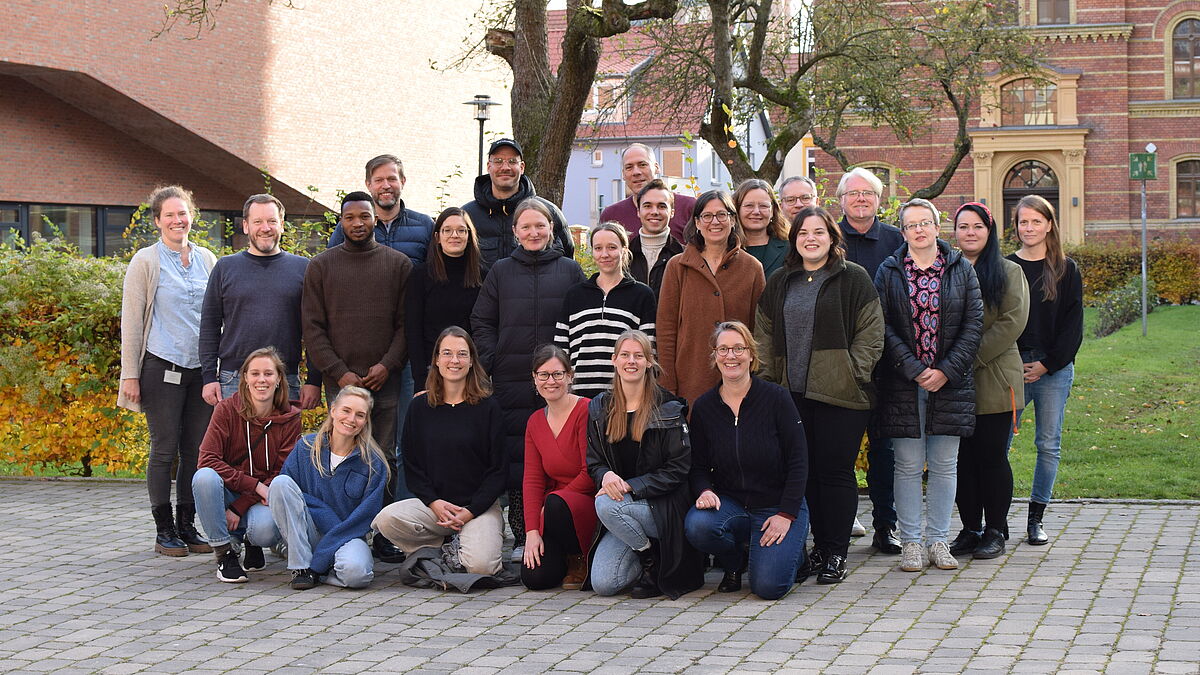
Das Institut für Politik- und Kommunikationswissenschaft – kurz IPK – ist ein Zusammenschluss des ehemaligen Instituts für Politikwissenschaft und des Lehrstuhls für Kommunikationswissenschaft. Das so entstandene Institut ist das bislang einzige seiner Art in Deutschland.
Ernst-Lohmeyer-Platz 3
17489 Greifswald (Hausanschrift)
17487 Greifswald (Postanschrift)
Geschäftsführende Direktorin
Professorin Dr. Stefanie Averbeck-Lietz
Stellvertretende geschäftsführende Direktorin
Professorin Dr. Corinna Kröber
Institutssekretariate
Fanny Tabel (PoWi)
Raum 3.01
Telefon +49 3834 420 3150
powi(at)uni-greifswald.de
Manuela Dittmann (KoWi)
Raum 3.04
Telefon +49 3834 420 3402
kowisekr(at)uni-greifswald.de
Aktuelles
Job Advertisement

Doctoral Positions in Political Science: Baltic Peripeties
The International Research Training Group “Baltic Peripeties: Narratives of Reformations, Revolutions and Catastrophes” is inviting applications for ten doctoral research positions at the University of Greifswald. The positions are open to applicants from several disciplines, including political science.
The political-science team is particularly interested in applications from candidates whose projects connect political-science questions with the IRTG’s interdisciplinary research programme.
Political Science and Baltic Peripeties
The IRTG brings together researchers from the Universities of Greifswald and Tartu and the Norwegian University of Science and Technology in Trondheim. Its research examines political, social and cultural turning points in the Baltic Sea region, with particular attention to the narratives through which change is anticipated, interpreted and contested.
For political scientists, this framework opens up questions such as:
- How do political actors frame crises and processes of change?
- How do competing narratives affect political conflict and its escalation?
- How do political expectations shift, and how do these shifts influence political behaviour?
- How do narratives about representation, gender, parties and institutions travel across countries?
- How do politicians and political organisations construct competing accounts of the same events?
Political-science projects can draw on a wide range of theoretical and methodological approaches. At the Institute of Political Science and Communication Studies, potential projects can be supervised by Jochen Müller (Political Sociology and Research Methods) or Corinna Kröber (Comparative Politics). Relevant areas of expertise include gender and political representation, parliaments and governments, parties and elections, legislative behaviour and political competition.
Possible Doctoral Projects
The following non-binding sample topics illustrate political-science projects that could fit the IRTG:
Gender, representation and political careers
- Changing Gender Norms in the Baltics: When Politicians Break Norms
- Understanding Gender Backlash in Highly Gender-Egalitarian Countries
- Conflicting Versions of the Gendered Division of Labour
- Biographical Peripeties in Politics: How Politicians Frame Experiences of Harassment
- How Expectations of Youth Representation Spill Over Across Countries in the Baltic Sea Region
Parties, political conflict and public narratives
- Intra-party Conflict Narratives: Understanding Factionalism in Baltic Political Parties
- Like Buttons and Hate Groups: Structural Determinants of (De-)Escalation in Digitised Narratives
- Shifting Expectations of Care in Narratives about the Welfare State
These topics are intended as illustrations only. Applicants are explicitly encouraged to develop their own research questions and areas of focus, provided that their proposed project connects with the IRTG’s overarching research framework.
View the complete list of sample topics
The Positions
The ten positions are expected to begin on 1 April 2027 and run until 31 March 2030. They are part-time positions at 65% of full-time hours, with remuneration according to pay group TV-L E13 Wissenschaft.
Doctoral researchers participate in the IRTG’s structured qualification programme and international workshops. The programme also includes cooperation with academic partners and co-supervisors in Tartu and Trondheim, as well as a planned six-month research stay at one of the partner universities.
The application deadline is 20 November 2026.
Applicants should consult the official job advertisement for the complete eligibility criteria, required application documents and submission instructions:
Read the full job advertisement and application requirements
Questions and Initial Project Ideas
Prospective applicants with political-science project ideas are welcome to contact Jochen Müller (Jochen.Muelleruni-greifswaldde) or Corinna Kröber (Corinna.Kroeberuni-greifswaldde) before applying. We would be happy to provide further information about the political-science research environment, the IRTG’s interdisciplinary structure and the possible fit of a proposed doctoral project.


![Call for Papers: Brücken bauen mit Kommunikation in polarisierten Diskurskulturen [Einreichungsschluss 14.10.2026]](/storages/uni-greifswald/_processed_/1/0/csm_Krupp-Kolleg_e7fe8fbb43.jpg)



Studiengänge
Vorlesungsverzeichnis

Veranstaltungen
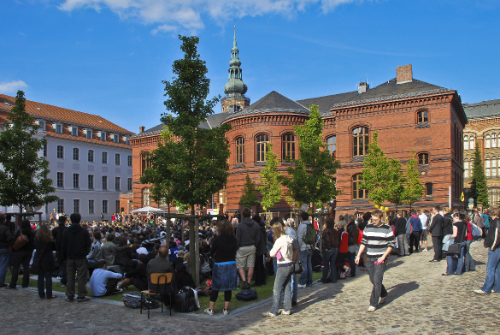
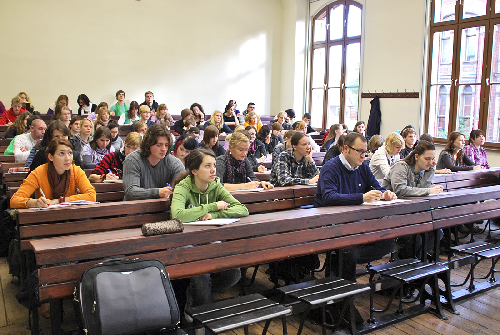
Alle wichtigen Semesterinformationen, Lehrveranstaltungen einschließlich der Kommentare sowie eine Wochenübersicht des Lehrangebotes sind in den Kommentierten Vorlesungsverzeichnissen zu finden.
Die Einschreibung in Lehrveranstaltungen erfolgt über das Selbstbedienungsportal.
Sowohl kulturelle als auch akademische Veranstaltungen sorgen für ausreichend Abwechslung im studentischen Alltag.
Gastvorträge, Medienprojekte und Konferenzen sind dabei nur einige der Möglichkeiten, die das Studium vielfältig bereichern.