Chair of Political Theory and History of Ideas
The chair represents the field of political theory and the history of ideas. Its research focuses—both systematically and in terms of the history of ideas—on the areas of democratic theory, constitutional theory, and international political theory (IPT). Research and teaching are guided by the understanding that political theory is a practice-oriented endeavor whose core theme is legitimate governance. Current research topics at the chair include the disintegration of multilateral orders (e.g., withdrawals from international treaties) and the digital transformation of democracy, particularly the role of Big Tech.
News
New team member: Dr. Sonja Riegler

We are very happy to welcome Dr. Sonja Riegler as a new member of the team at the Chair of Political Theory and History of Ideas! She previously held a postdoctoral fellowship at Normative Orders at Goethe University Frankfurt. Further information on her research interests and publications, as well as her current courses, can be found here.
Contributions at the ECPR General Conference 2026
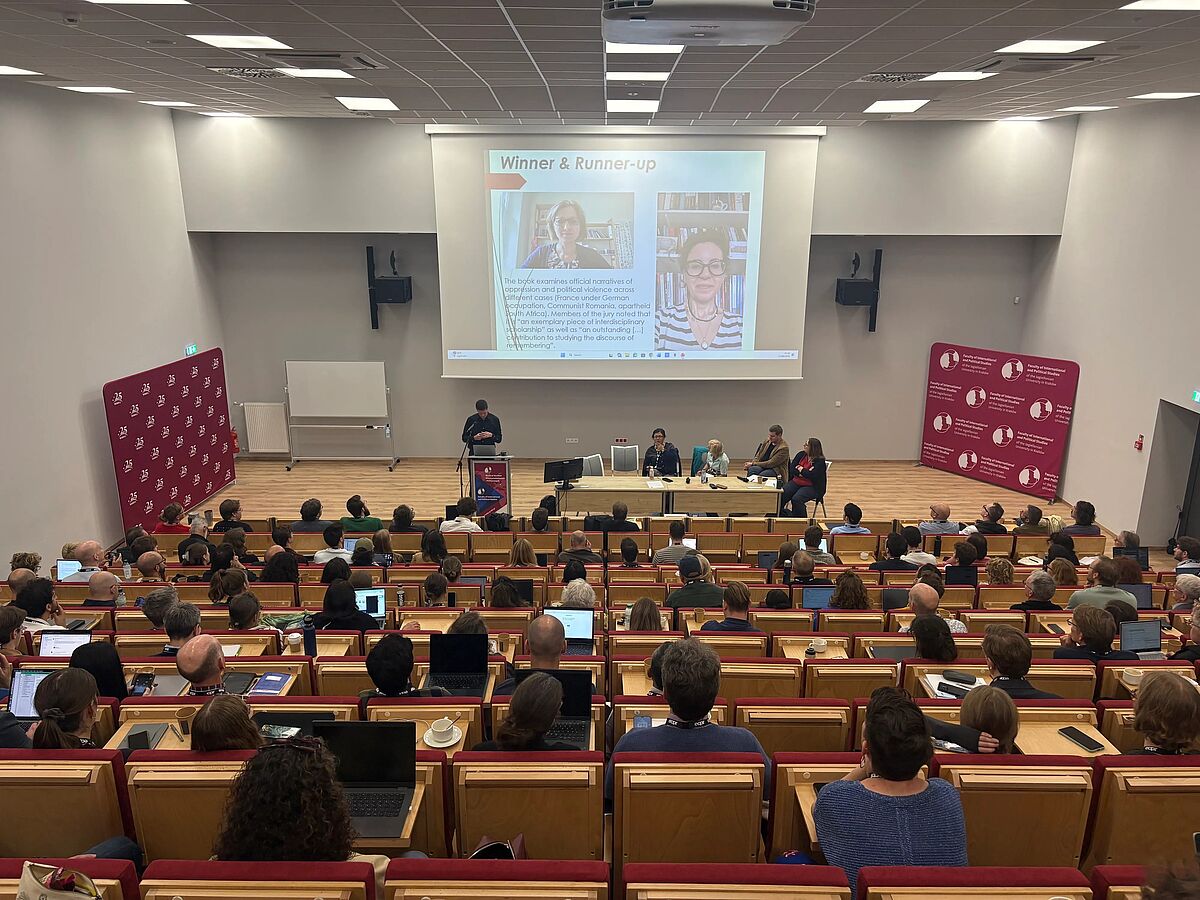
At the 2026 ECPR General Conference, September 8–11 in Krakow, Markus Patberg presented a paper titled “Big Tech, the European Union, and Democratic Self-Defense”. He also spoke at a plenary roundtable on the future of democratic theory in light of democratic regression.
“Political Theory in the Role of a Democratic Underlabourer” – An Interview with Markus Patberg
A (German-language) interview with Markus Patberg was published in the university magazine Campus*1456.
Roundtable “The Revival of Constituent Power” at the LSE European Institute
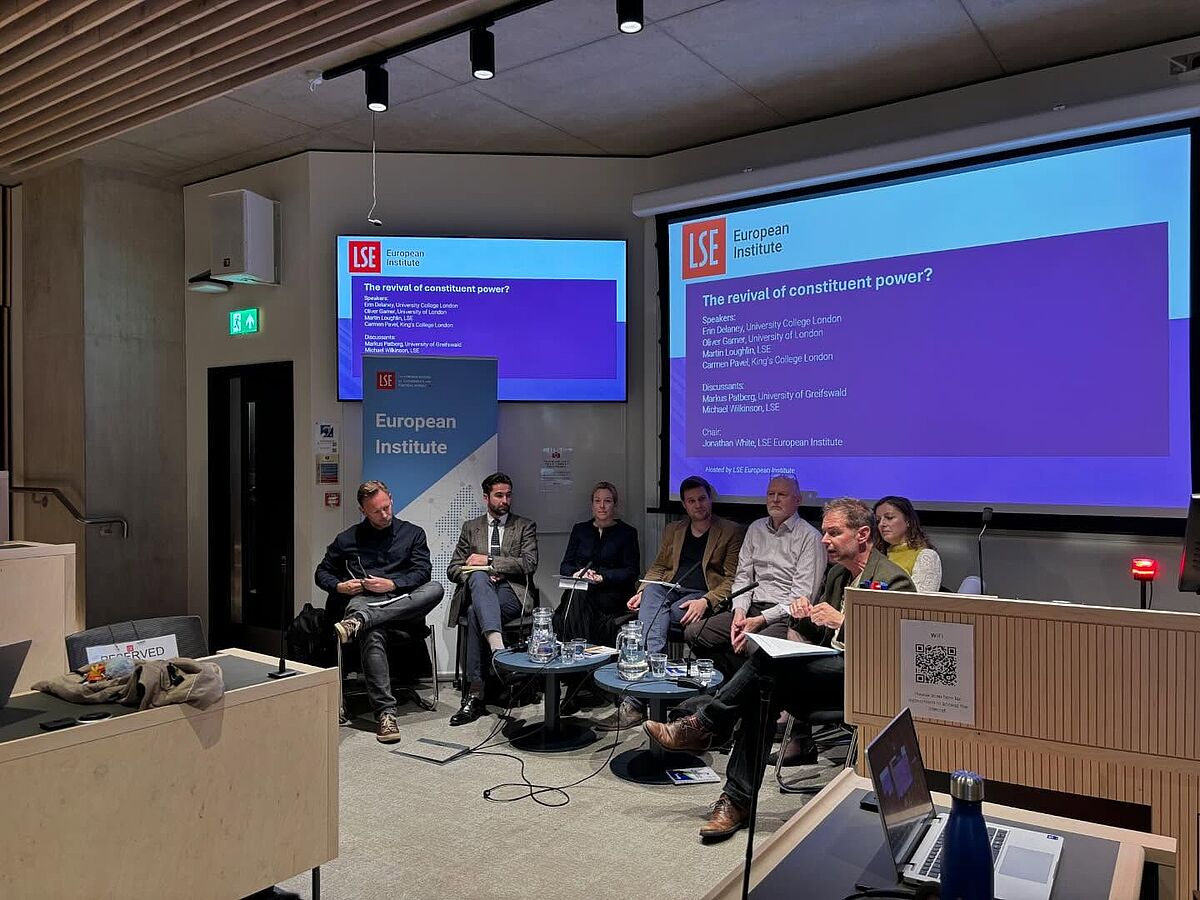
On May 12, 2026, a roundtable organized by Markus Patberg on the topic of “The Revival of Constituent Power” took place at the LSE European Institute (participants: Erin Delaney, Oliver Garner, Martin Loughlin, Carmen Pavel, Mike Wilkinson, Jonathan White). The discussion centered on the significance of the concept of constituent power in analyzing current conflicts over political legitimacy, particularly in federal as well as multi- and transnational polities such as the United States, the United Kingdom and the European Union. The program can be found here.
New book: An introduction to political theory
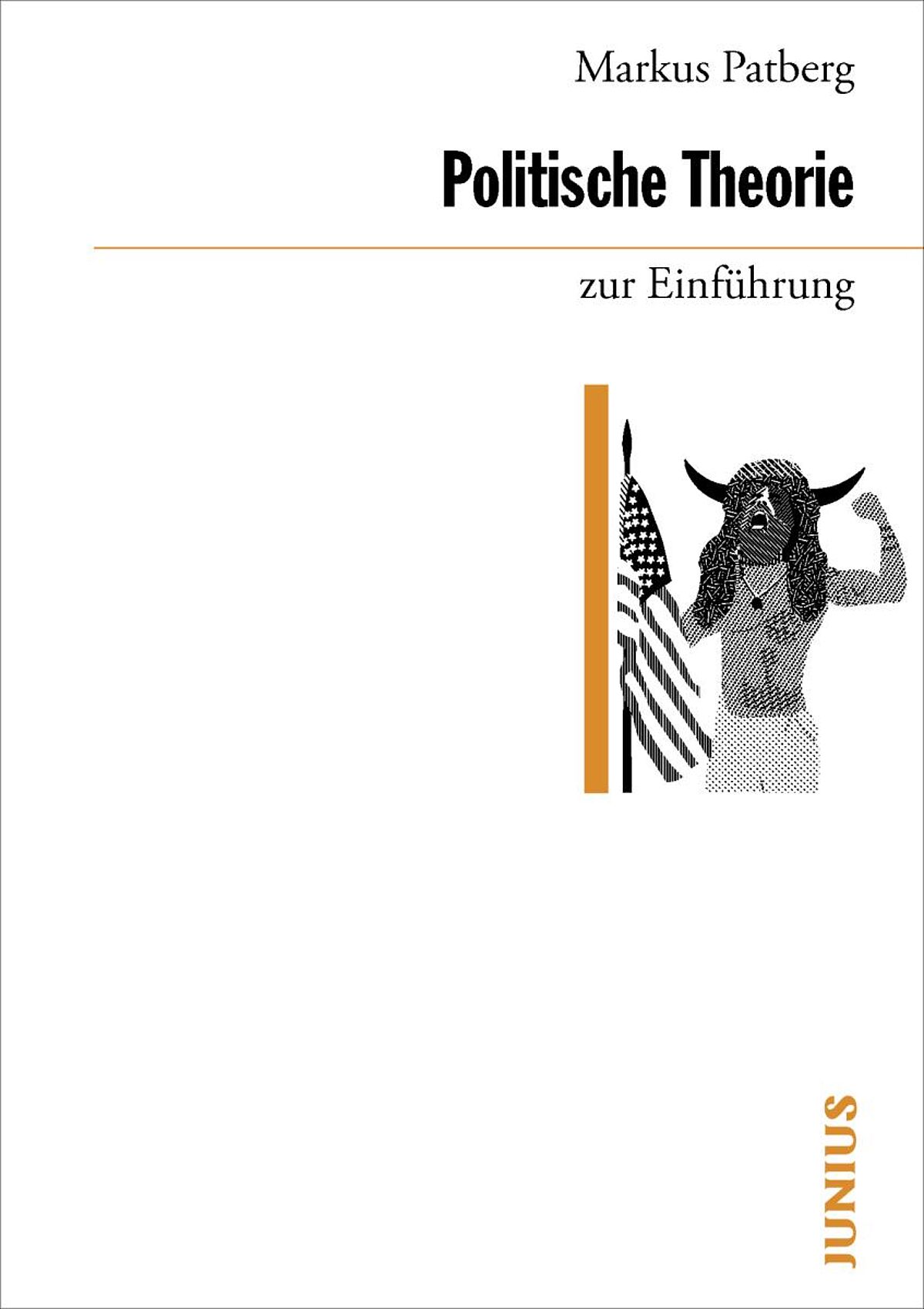
Published by Junius: Politische Theorie zur Einführung
We live in a time of fundamental political upheaval, in which old certainties about legitimate governance are fading. Political theory seeks to grasp, assess, and rethink such developments – and is thus itself in a state of constant flux. This German-language introduction explains fundamental concepts of political theory, such as rule, legitimacy, and democracy, through the lens of current political events, issues, and conflicts. In light of racist police violence, can we say that the social contract is being broken? Is the fact that many U.S. citizens believe Trump’s narrative of a “stolen election” an expression of a crisis of legitimacy? And what are we to make of Viktor Orbán’s claim that even an illiberal state can be a democracy?
For a short excerpt, see here.
New publication: The Oxford Handbook of Constituent Power
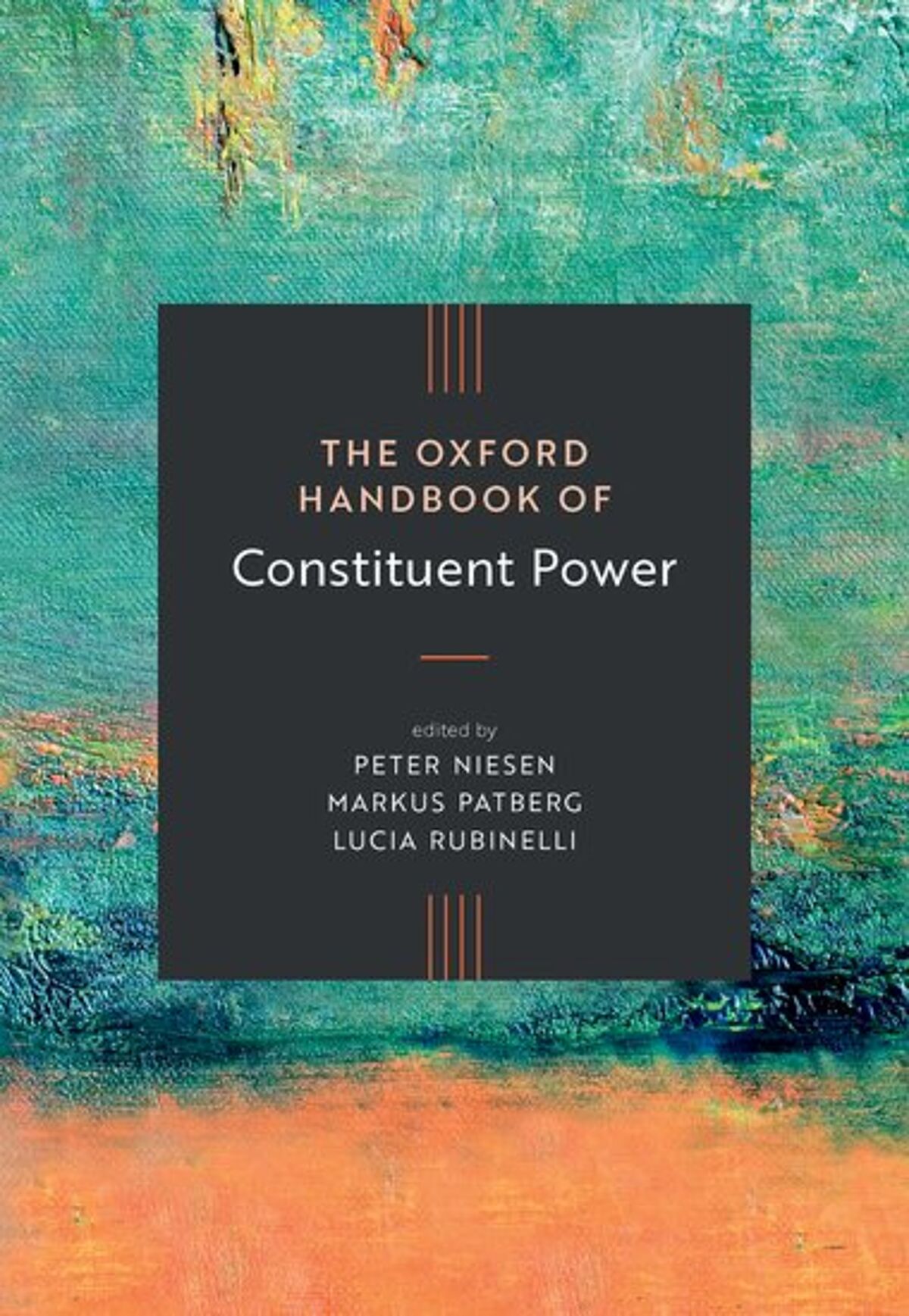
Recently published: The Oxford Handbook of Constituent Power, edited by Peter Niesen, Markus Patberg, and Lucia Rubinelli (OUP 2026).
In sixty chapters, the handbook explores new paths in the intellectual history of constituent power (Part I); systematically develops the idea of constituent power in its relation to neighbouring concepts such as sovereignty (Part II); examines constituent power’s role and meaning in the context of different types of polities, including international institutions such as the European Union and the United Nations (Part III); investigates the plural manifestations of constituent power in terms of practices and agents, ranging from revolutionary violence to citizens’ assemblies (Part IV); and tackles new challenges and developments such as the prefigurative politics of protest movements or ascriptions of constituent power to nature (Part V).